GENERAL
Mental Health Colors and Their Impact on Mood and Emotions

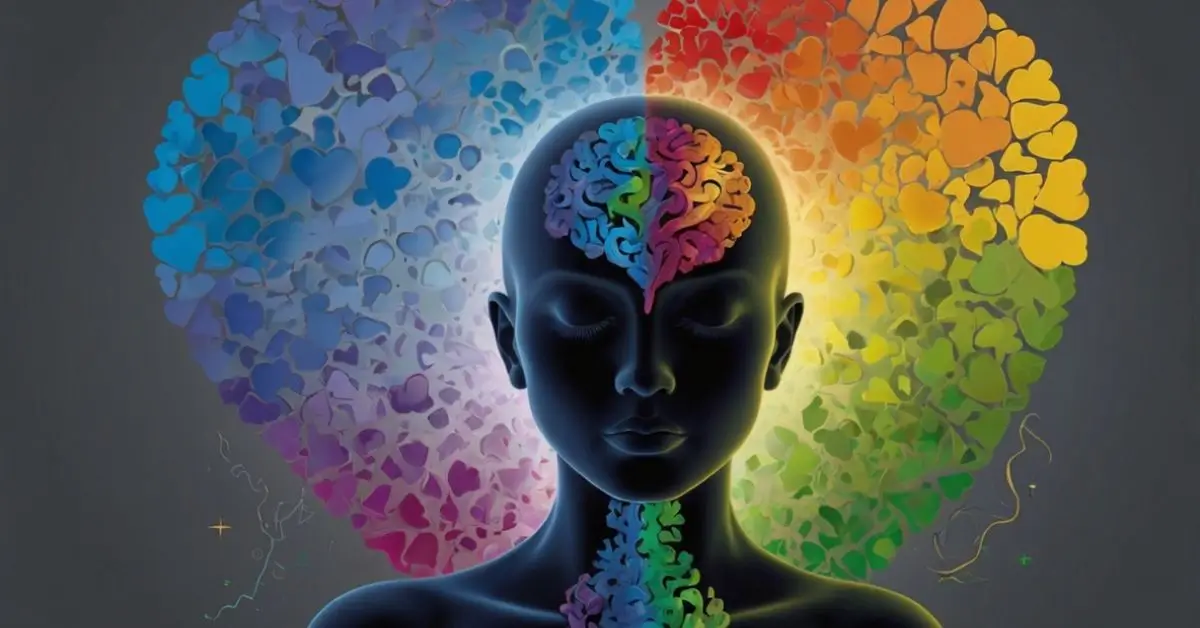
Mental health colors have a profound effect on our psychological well-being. These hues are more than just visual experiences; they play a critical role in mood regulation, emotional balance, and therapeutic processes. In the field of color psychology, specific colors are associated with mental states like anxiety, depression, tranquility, and motivation. Whether it’s in healthcare environments, branding, or personal spaces, the right color choices can significantly impact how we think and feel.
Understanding the Psychology Behind Mental Health
The science of color psychology suggests that mental colors can stimulate different parts of the brain. Colors can uplift, calm, energize, or even provoke anxiety depending on the individual and context.
Why Colors Matter in Mental Health
- Mood Regulation: Certain colors like blue and green are calming, while red and yellow can be energizing or even anxiety-inducing in excess.
- Environmental Influence: Therapy rooms often use soft tones to promote openness and trust.
- Cultural Perceptions: The meaning of colors varies globally; for instance, white signifies peace in some cultures and mourning in others.
Most Common Mental Health Colors and Their Effects
Here’s a look at the top colors that are commonly associated with mental health and the psychological impact they have:
Blue – The Calming Agent
Often referred to as the most universally liked color, blue reduces stress, lowers heart rate, and encourages mental clarity.
“Blue is not just a color; it’s a state of serenity.” – Color Therapy Expert
Used in hospitals, bedrooms, and therapy offices, blue is a dominant mental health color for its calming nature.
Green – Nature’s Tranquilizer
Symbolizing growth and renewal, green mimics nature and has a relaxing impact. It reduces eye strain and promotes emotional balance.
Yellow – The Cheerful Motivator
Known to stimulate serotonin production, yellow is linked with joy and optimism. However, it can be overstimulating if used excessively.
Red – The Energy Booster
While red invokes passion and urgency, overexposure can lead to agitation or stress. It’s powerful in moderation and often used in exercise or motivation-focused spaces.
Purple – Spiritual and Reflective
Associated with introspection and spirituality, purple is ideal for meditation spaces. It combines the calmness of blue and the energy of red, making it a balanced mental health color.
Grey – The Neutral Stabilizer
Though often linked with dullness or depression, grey can also serve as a grounding backdrop that helps other brighter colors shine.
Orange – The Warm Encourager
Orange combines the warmth of red with the optimism of yellow. It is stimulating but friendlier than red and often used to combat lethargy.
The Science Behind Color Therapy
Color therapy, or chromotherapy, is an alternative treatment method used to balance mental and emotional health. Each mental health color targets specific emotional responses:
- Red: Stimulates physical activity and alertness.
- Green: Encourages internal harmony and restfulness.
- Blue: Aids in communication and tranquility.
- Yellow: Enhances cognitive function and joy.
Clinical Application
In modern mental health practices, therapists design rooms with specific color palettes. For example, light blue walls with green indoor plants are common in anxiety treatment rooms.
Comparing the Impact of Mental Health Colors
Here’s a detailed comparison of common mental health colors based on cost, accessibility, emotional efficiency, cultural acceptance, and ease of implementation:
| Color | Cost of Use | Emotional Efficiency | Ease of Use in Design | Cultural Acceptance | Best Used For |
| Blue | Low | High | Very Easy | High | Anxiety & Stress Relief |
| Green | Low | High | Easy | Very High | Emotional Stability |
| Yellow | Medium | Medium-High | Moderate | Variable | Motivation & Mood Lift |
| Red | Low | Medium | Tricky | Culturally Mixed | Energy & Alertness |
| Grey | Low | Low | Very Easy | High | Background Balance |
| Purple | Medium | High | Moderate | High | Introspection & Calm |
How to Use Mental Health Colors in Daily Life
At Home
Use soothing mental health colors in your bedroom like sky blue, lavender, or sage green to promote better sleep and reduced anxiety.
In the Workplace
Incorporate green plants, light blue walls, or even yellow accessories to encourage productivity and reduce burnout.
In Therapy
Therapists recommend using softer tones during counseling sessions to create an inviting, non-threatening environment. Many use color strategically in room décor and lighting.
Industry Standards and Research Findings
Recent studies have shown that patients in blue or green-themed hospital rooms recovered faster and required fewer painkillers. According to the American Psychological Association:
“Color in therapeutic environments enhances patient mood, reduces agitation, and improves communication.”
Even tech companies are integrating mental health colors in their apps to improve user experience and reduce cognitive fatigue.
Misuse and Overexposure
Not all use of color is beneficial. Overuse of high-stimulation colors like red or yellow can lead to mental exhaustion, irritability, or even visual stress. This is especially critical in settings like psychiatric hospitals or schools.
Cultural Nuances in Interpreting Mental Health Colors
In some Eastern cultures, white represents mourning, while in Western cultures, it symbolizes purity and calm. Understanding cultural context is crucial when applying mental health colors globally.
Trends in Color Psychology
With the rise of digital therapy and mental wellness apps, color selection has become a strategic aspect of UX design. Soft gradients, earth tones, and muted colors are gaining popularity for promoting a sense of emotional safety and clarity.
The Future of Mental Health Colors in Design
As awareness around mental health continues to grow, more industries—architecture, fashion, interior design—are aligning their strategies with the power of color psychology. Schools are painting classrooms in calming shades, and urban planners are integrating greenspaces for emotional well-being.
Conclusion
Mental health colors aren’t just about beauty—they’re functional tools in emotional regulation, cognitive clarity, and mental health support. From therapy offices to personal spaces and digital environments, the smart use of color can make a powerful difference in how people feel, think, and heal. Prioritizing color in our environments is not just a design trend; it’s a wellness strategy grounded in science and experience.
FAQs
What are mental health colors?
Mental colors are shades that influence emotional and psychological well-being, such as blue for calm or green for balance.
How do mental colors work?
They work by triggering psychological responses in the brain, influencing mood, emotions, and even physiological reactions like heart rate.
Can I use mental health colors at home?
Yes, incorporating calming colors like soft blues, greens, or pastels in your home can help reduce stress and improve mental clarity.
Are mental health colors supported by science?
Yes, color psychology and chromotherapy are backed by research showing their effects on mood and emotional responses.
Is there a best color for anxiety?
Blue is widely regarded as the most effective color for reducing anxiety due to its calming and stabilizing effects.
Do mental colors vary by culture?
Yes, cultural context plays a significant role. For instance, white may represent peace in some places and mourning in others.
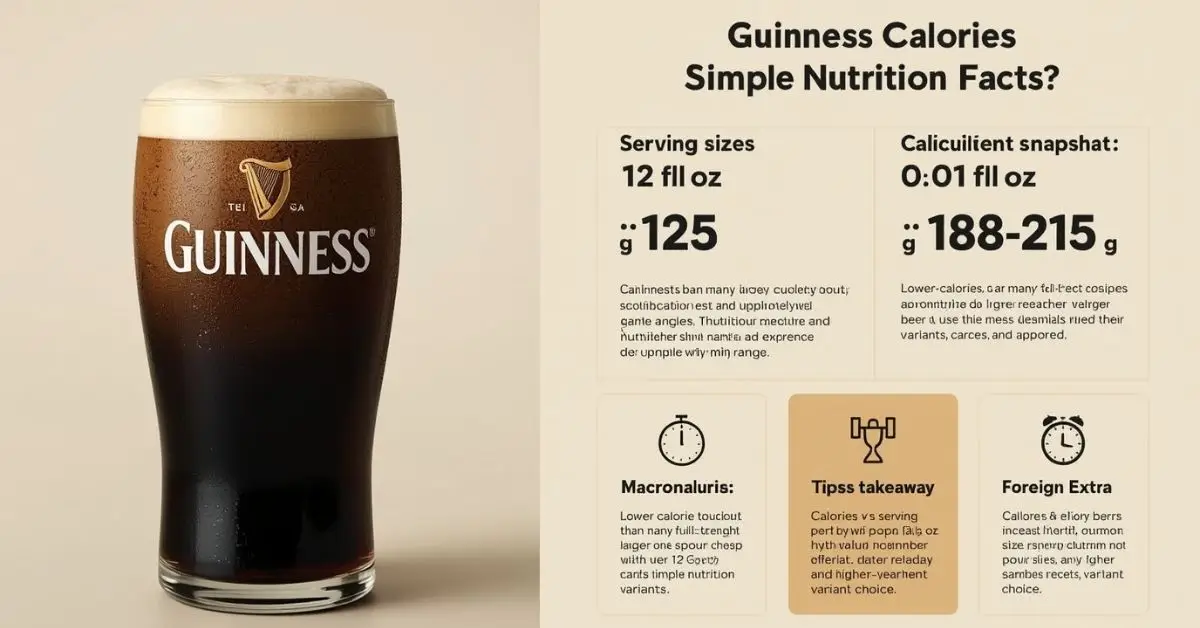
Ever wonder if your beloved pint is sneaking in more calories than you’d like? You’ve been there. I’ll help you understand [guinness calories] the smart way—no fluff, just real-world facts and easy clarity.
Quick Answer
A pint (16 oz) of Guinness Draught has about 210 calories (about 35 kcal per 100 ml). Calories come mainly from alcohol and carbs. Simple, direct, no guesswork.
What’s in a 12-oz Guinness Draught?
This tells you exactly what’s in a standard serving.
You’ll learn the facts fast:
- 12 oz (~355 ml) of Guinness Draught has 125 calories (Alcohol 11.2 g, carbs 10 g).
- That’s ~35 kcal per 100 ml for Guinness Draught or Extra Stout. A full pint rounds to ~210 calories total.
Key Intake: A full pint = ~210 kcal; most calories come from alcohol.
How Do Variants Stack Up?
See how different types compare no guessing here.
| Variant | Calories (per 12 oz) | Key Notes |
| Draught | ~125 kcal | Standard, smooth |
| Foreign Extra Stout | ~194 kcal | Rich, roasty |
| Baltimore Blonde Lager | ~167 kcal | Hoppy, lighter |
| Guinness Smooth (per 100 ml) | ~57 kcal (~217 kcal pint) |
Key Intake: Higher ABV = more calories. Pick the one that fits your macro budget.
Why Calories Vary Breakdown by Source

Learn where the calories come from, not just numbers.
- Alcohol has 7 kcal per gram; in Draught, ~62% of calories are from alcohol.
- Carbs add the rest—around 10 g in a 12-oz Draught (~40 kcal).
Key Intake: Calories split roughly 60% alcohol, 40% carbs.
Non-Alcoholic and Low-Cal Alternatives
Find choices when you want flavor without the calorie hit.
- Guinness 0: only 17 kcal per 100 ml (≈ 68 kcal per pint).
- Good picks if you’re tracking macros or avoiding alcohol.
Key Intake: Guinness 0 is a clever low-calorie swap for your pint fix.
What This Means for Dieters & Health-Mindful Drinkers
A quick guide to fit Guinness into your nutrition plan.
- A pint ~ 210 kcal is moderate—less than many craft ales (160–180 kcal).
- If counting macros, know: alcohol is the main calorie source.
Key Intake: It’s not “diet-friendly” but moderate and trackable.
Final Takeaway
This isn’t sugar-coated. If you’re watching your calories, understanding “guinness calories” means choosing wisely, knowing exactly what’s in your pint, and fitting it into your wellness plan like a smart decision, not a hidden cost.
FAQ’s
How many calories are in a pint of Guinness?
~210 kcal per pint, based on ~35 kcal per 100 ml.
What’s the calorie content of a 12-oz Guinness Draught vs Extra Stout?
Draught ~125 kcal; Extra Stout ~180–194 kcal.
Are there lower-calorie alternatives to Guinness stout?
Yes—Guinness 0 has only ~17 kcal per 100 ml (≈ 68 kcal per pint).
Guinness calories vs Bud Light: which is lower?
Guinness Draught (~125 kcal) is similar or slightly higher than Bud Light (~110 kcal).
How many calories per gram of alcohol are in Guinness?
Alcohol contributes 7 kcal per gram; ~60% of calories in Draught come from alcohol.
Calories in Guinness Draught nutritional facts explained?
~125 kcal from alcohol (78 kcal) + carbs (~40 kcal), plus ~1 g protein.
Is Guinness high in calories for a diet plan?
It’s moderate; track it, and it can fit in but be mindful of alcohol calories.
Expert Citations
- Healthline: Detailed breakdown of calories from alcohol vs carbs in Guinness Draught.
- Guinness.com: Official calorie counts across variants (Draught, Extra Stout, 0.0, etc.).
- Guinness product pages: Precise nutrition data for each variant – Draught, Foreign Extra Stout, Blonde, Smooth, etc.

Golf can be cruel. One minute you’re leading the Masters, the next you’re fighting to hold it together. Rory Masters collapse moments have given fans drama, heartbreak, and unforgettable TV.
We’ve all seen it happen, the missed shots, the tense body language, the scoreboard slipping away. But why does it happen to a player as good as Rory McIlroy? Let’s break it down.
Quick Answer
The Rory Masters collapse refers to multiple high-profile moments at Augusta where Rory McIlroy lost his lead, most famously in 2011 when he shot 80 in the final round, and again in 2025 with late-round bogeys. Causes include mental pressure, course difficulty, and external distractions like slow play. Yet, Rory has also turned these failures into motivation, ultimately winning the Masters in 2025 to complete his career Grand Slam.
Rory McIlroy: Masters Career Profile
| Category | Details |
| Name | Rory McIlroy |
| Date of Birth | May 4, 1989 (age 36) (ESPN.com) |
| Hometown | Holywood, Northern Ireland (ESPN.com) |
| Turned Pro | 2007 (ESPN.com) |
| Masters Titles | 2025 (First win; career Grand Slam completed) (Reuters, The Washington Post) |
| Notable Collapses at Masters | 2011 final-round meltdown (80, from 4-shot lead) (Wikipedia) |
| Masters Attempts Before Win | 17 attempts at Augusta by 2025 (The Sun) |
| Other Major Wins | U.S. Open 2011, PGA Championship 2012 & 2014, Open Championship 2014 (Data Golf, Wikipedia, Reuters) |
| Total Career Wins (2025) | 44 total: 29 PGA Tour, 18 European Tour, others (Talksport) |
| Career Grand Slam | Achieved with 2025 Masters win; one of six to do so (Reuters, Talksport) |
| Signature Moment | Emotional collapse to celebrating Green Jacket after playoff win vs. Justin Rose (The Washington Post) |
| Key Strengths | Multiple Majors, career Grand Slam, long-time world No.1 (European Tour, Reuters) |
| Resilience & Legacy | Climbed back from 2011 collapse to claim Masters, completing a decade-long quest (The Scottish Sun, Reuters) |
2011 The Collapse That Started It All
The first big Rory Masters collapse came in 2011.
- Rory led by four shots after three rounds.
- On Sunday, Augusta’s pressure took over.
- He shot an 80 and finished tied for 15th.
2025 A New Collapse, Same Augusta Pressure
Fast forward to 2025. Rory was 4-under through 14 holes in Round 1.
- Then came bogeys on 15 and 16.
- A double bogey on 17 sealed the damage.
Paul McGinley, former Ryder Cup captain, called it a slow play distraction McIlroy couldn’t shake. This wasn’t the first time Rory felt Augusta’s mental toll.
Why Collapses Happen at Augusta
Definition:
Mental collapse in golf Majors is when focus, rhythm, and execution fall apart under tournament stress.
Augusta National tests more than swing mechanics. It pushes the mind to breaking point.
Key factors:
- Course design: punishes tiny errors.
- Crowd energy: amplifies every mistake.
- Mental game: pressure spikes near the finish.
Rory’s Redemption 2025 Masters Win
Here’s the twist: despite the early stumble, Rory fought back. By Sunday evening, he wore the green jacket.
- He became only the 6th golfer to complete the career Grand Slam delay McIlroy had chased for over a decade.
- His win proved collapse doesn’t have to define you.
What Fans and Players Can Learn
- Stay present: Focus on one shot at a time.
- Adapt fast: Don’t let a bad hole become a bad round.
- Pressure prep: Simulate high-stakes moments in practice.
Real-world note:
I’ve seen players choke in local tournaments because they never practiced the mental side. Rory’s story shows why it matters.
FAQs
Why is Rory McIlroy’s Masters collapse famous?
It’s remembered for how quickly a winning position turned into a blowout, especially in 2011 when he led by four shots.
How many times has Rory collapsed at the Masters?
At least twice in high-profile ways — 2011’s final-round meltdown and the 2025 early-round stumble.
What caused Rory’s 2025 collapse?
Analysts point to mental pressure and slow play distractions from his group.
Has Rory ever recovered from a Masters collapse?
Yes. He won the Masters in 2025, securing his career Grand Slam.
Expert Citations
- Paul McGinley — TalkSport: “Slow play affected Rory’s rhythm.”
- Golf.com — “Analyst says slow play led to Rory’s Masters collapse.”
- Wall Street Journal — “McIlroy completes career Grand Slam with 2025 Masters win.”
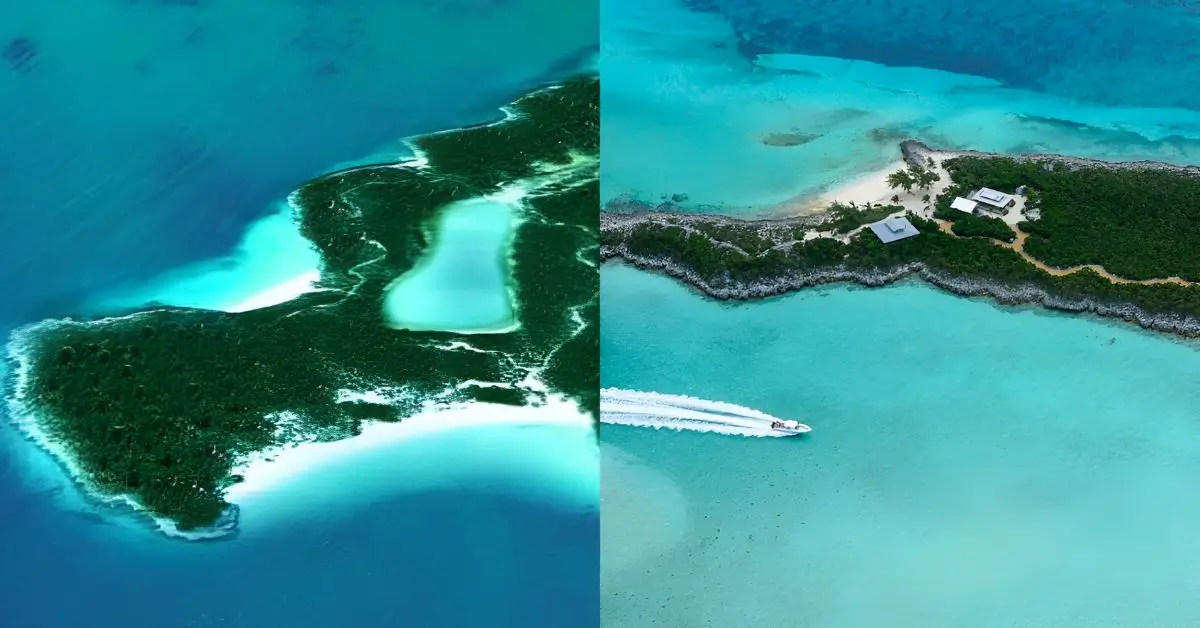
You’re curious, and honestly—so am I. What’s it like to own a slice of Caribbean magic, hidden away from prying eyes? Especially when that slice belongs to a Hollywood legend. Let’s cut through the noise and get real.
Quick Answer
Johnny Depp’s Island is called Little Hall’s Pond Cay. He bought it in 2004 for about $3.6 million. It spans roughly 45 acres and is 60 miles southeast of Nassau in the Bahamas. He still owns it as of mid-2025.
Where is Johnny Depp’s Island located?
Here’s what you’ll learn: Its geography, how big it is, and where it sits in paradise.
- Located in the Exuma Islands, Bahamas, about 60 miles southeast of Nassau (Tuko.co.ke – Kenya News, Market Realist, News).
- Covers roughly 45 acres (18 hectares), a sizable tropical property with six beaches (Tuko.co.ke – Kenya News, Newszetu).
It’s a mid-size tropical hideaway, a boat-ride from Nassau. Pure, quiet, untouched.
What’s the story behind its name and purchase?
Here’s what you’ll learn: Why Johnny Depp bought it, what he named parts of it, and how he transformed it.
- Johnny Depp Island was discovered while filming Pirates of the Caribbean. He bought it in 2004 for about $3.6 million (Vanity Fair, News, Homes & Gardens).
- The six beaches are named after his loved ones and mentors—Gonzo (Hunter S. Thompson), Lily Rose, Jack, Brando (Marlon Brando), and Paradis (Vanessa Paradis) (Vanity Fair, Market Realist, People.com).
- He built a ranch-style main house with 360° views, solar-powered guest structures, a bamboo yurt, and a beach house—low-key luxury meets eco-sensitivity (DDW, Tinseltown Tales, DMARGE, CEO Today).
What makes it a sanctuary—and does Depp still own it?
Here’s what you’ll learn: Why it’s meaningful to Johnny Depp and if he still owns it.
- Depp calls Johnny Depp Island “pure and beautiful” and says you can feel your “pulse drop” there—instant freedom (Vanity Fair, Newszetu, Tinseltown Tales).
- As of mid-2025, he still owns it despite rumors of a sale to J.K. Rowling (CEO Today).
Celebrity & luxury context
Here’s what you’ll learn: How it fits with celeb real-estate and pop culture.
- Johnny Depp Island sits among other Bahamas celebrity islands, near properties owned by Eddie Murphy and David Copperfield (Tuko.co.ke – Kenya News).
- The island has hosted Depp’s wedding to Amber Heard in 2015 and served as a detox retreat during difficult times (Glamour, DMARGE, Market Realist).
Takeaway
From celebrity news readers to luxury travellers to real-estate enthusiasts, Little Hall’s Pond Cay—better known as Johnny Depp Island—is a rare, personal hideout that blends Depp’s eclectic style with genuine peace. Based on real-world reports and Depp’s own words, this island is more than property—it’s sanctuary.
FAQ’s
Where is Johnny Depp’s island located?
A private island called Little Hall’s Pond Cay, in the Exuma chain, 60 miles southeast of Nassau, Bahamas.
What is the name of Johnny Depp’s private island?
It’s called Little Hall’s Pond Cay.
How much did Johnny Depp’s island cost?
He bought it for around $3.6 million in 2004.
Can you visit Johnny Depp’s island in the Bahamas?
No—access is strictly by invitation only.
What’s the history of Johnny Depp’s Little Hall’s Pond Cay?
He discovered it during Pirates of the Caribbean filming, bought it, built eco-homes, and still owns it as of 2025.
What are some luxury aspects similar to this island?
Think celebrity-owned private islands—secluded, bespoke retreats designed for quiet, high-end living.
Expert Sources
- Vanity Fair – Their coverage on Johnny Depp Island includes direct quotes and historical context from the actor himself. (vanityfair.com)
- People Magazine – Their article on Johnny Depp Island offers fact-checked property details and insider background. (people.com)
- Homes & Gardens – A respected home and lifestyle publication that provides credible real-estate insights, including luxury property features and valuations for celebrity-owned estates. (homesandgardens.com)
-
 GENERAL8 months ago
Waterless Skincare: The Future of Potent, Eco-Friendly Beauty
-
 GENERAL8 months ago
Gary Brecka Supplements: Unlocking Peak Human Performance
-

 GENERAL8 months ago
Activia Yogurt Nutrition Facts You Shouldn’t Ignore
-

 HEART TIPS8 months ago
Common Heart Home Health: Trusted Cardiac Care at Home
-

 WORKOUTS8 months ago
Butt Exercise Machine: Intelligent Exercises to Change Your Glutes
-
 GENERAL8 months ago
Healthy Living at Home for a Better You
-
 HEART TIPS8 months ago
Theralogix NeoQ10 Coenzyme Q10 Supplement – Heart Health
-

 HEALTHY DIET8 months ago
Arbonne 30 Days to Healthy Living