GENERAL
NCMOS Explained: No Strings, Some Consequences


In today’s socially fluid environment, youth behavior is evolving quickly — and one term making waves, especially among university students in Utah and members of the Mormon community, is ncmos. Short for Non-Committal Make-Outs, ncmos refers to kissing or physical closeness without romantic commitment or emotional attachment. While it may seem like harmless fun, Non-Committal Make-Outs introduce a tangled web of emotional, cultural, and ethical considerations.
This article dives deep into the trend — its origin, cultural relevance, emotional outcomes, and what it means for modern relationships.
What Are NCMOs?
NCMOS are instances where people engage in kissing (or make-out sessions) without any expectation of dating, love, or commitment. These interactions are typically:
- Casual
- Emotionally uninvolved
- Spontaneous
- One-time-only
Unlike dating or romantic courtship, these experiences revolve around physical closeness rather than emotional depth.
How Did This Trend Begin?
The concept became popular particularly in Utah’s religious circles, especially among Mormon (LDS) college students. The Mormon religion strongly emphasizes abstinence and chastity before marriage. To stay within these boundaries yet still explore attraction, many young adults began practicing Non-Committal Make-Outs — perceiving them as a loophole.
These non-committal kisses grew into a cultural norm on campuses where students sought freedom, identity, and experimentation without guilt.
Why Do People Engage in NCMOs?
Several psychological and social factors drive this behavior:
- Fear of commitment: People want affection without strings attached.
- Peer pressure: It’s common in friend groups, especially when everyone’s doing it.
- Avoiding vulnerability: Emotional closeness can be scary; casual make-outs feel safer.
- Belief in personal autonomy: Some see it as their right to explore intimacy casually.
Despite its casual nature, this trend often leads to unexpected emotional consequences.
The Emotional & Mental Impact
Though ncmos seem lighthearted, they often create internal conflict — particularly when expectations are misaligned.
Pros:
- Freedom and spontaneity
- No pressure of a relationship
- Temporary emotional relief
Cons:
- Feelings of confusion or regret
- One-sided emotional attachment
- Internal conflict with personal or religious values
- Difficulty forming future emotional bonds
“It was just a kiss… until I realized I cared more than I thought,” one college student admitted.
Non-Committal Make-Outs vs Hookups: What’s the Difference?
Though both involve casual intimacy, ncmos usually stop at kissing. Hookups often go further into sexual territory.
| Feature | NCMOs | Hookups |
| Physical Intimacy | Kissing only | Kissing + sexual acts |
| Emotional Involvement | Minimal or none | Often casual, sometimes deeper |
| Commitment | None | None |
| Popular Among | Religious/conservative youth | General youth culture |
| Risk of Confusion | High | Very high |
How Do Non-Committal Make-Outs Compare to Traditional Dating?
| Aspect | NCMOs | Traditional Dating |
| Emotional Depth | Often lacking | Typically present |
| Longevity | Short-term | Long-term potential |
| Communication Required | Minimal | High |
| Time & Energy | Low | Moderate to high |
| Emotional Fulfillment | Temporary | Often long-lasting |
Role of Social Media
Apps like TikTok, Instagram, and Snapchat have made it easier for casual encounters to flourish.
- Viral content glamorizes brief romantic moments
- Hashtags normalize momentary affection
- Public sharing (e.g. “storytime” videos) reinforces the trend
- Young people chase attention and validation through romantic spontaneity
This creates an environment where uncommitted make-outs are not just accepted — they’re celebrated.
Communication Gaps
Many complications arise from miscommunication. One person might say:
“It was just a make-out.”
The other might believe:
“We shared something meaningful.”
Clear discussions before and after such interactions are critical to preventing confusion or hurt feelings.
Expert Opinions
Behavioral experts warn that engaging too often in ncmos may:
- Lower one’s sensitivity to deeper emotions
- Lead to numbness in romantic scenarios
- Make it harder to build meaningful future relationships
Dr. Amelia Holt, a youth counselor, says: “Frequent casual kissing without emotional connection rewires how we perceive intimacy and trust.”
Gender Double Standards
Sadly, the social judgment around Non-Committal Make-Outs isn’t gender-neutral:
- Males are often praised for casual kissing
- Females may be judged harshly for the same behavior
This reflects longstanding societal biases and contributes to emotional harm and inequality.
Ethical Considerations
Even if both individuals consent, ethical questions remain:
- Are we objectifying people for momentary gratification?
- Are we normalizing emotional detachment?
- Is this trend reshaping how we value affection?
Ethical affection requires honesty, empathy, and mutual respect — not just permission.
Should You Try an NCMO?
Before you participate in a brief romantic encounter, ask yourself:
- Am I emotionally prepared for a no-strings experience?
- Will this conflict with my personal or cultural values?
- Are we both on the same page?
- Is the momentary fun worth the emotional aftermath?
Respect & Responsibility
Whether you embrace or avoid Non-Committal Make-Outs , the foundation should be the same:
- Respect others’ feelings and boundaries
- Be honest about your intentions
- Don’t manipulate, mislead, or assume
These principles keep casual encounters emotionally safe for everyone involved.
Conclusion
NCMOs (Non-Committal Make-Outs) reflect a growing trend among youth seeking physical affection without emotional or relational ties. While often seen as harmless fun, they carry deeper implications. Emotionally, these casual encounters can cause confusion, regret, or attachment when expectations aren’t clearly communicated. Morally, they often clash with cultural or religious values, particularly in conservative communities. Psychologically, repeated casual intimacy may reduce one’s ability to form meaningful future relationships.
Social media has amplified the trend, making such behaviors more visible, accepted, and even glamorized. Yet, despite mutual consent, ethical questions remain particularly around honesty, respect, and emotional responsibility. Gender double standards also complicate the conversation, often unfairly judging women more harshly than men.
Ultimately, while non-committal make-outs offer short-term pleasure, they demand long-term awareness. Clear communication, emotional maturity, and mutual respect are essential for anyone considering this modern form of intimacy.
FAQs
What does ncmos stand for?
It stands for Non-Committal Make-Outs, referring to kissing without emotional or relational obligation.
Are Non-Committal Make-Outs different from hookups?
Yes. Ncmos typically involve only kissing, while hookups can include more intense physical engagement.
Do ncmos impact mental health?
Yes, frequent casual intimacy without emotional connection can lead to guilt, confusion, or emotional numbness.
Why are ncmos common in religious communities?
They’re sometimes viewed as a way to explore physical closeness without violating rules around sexual abstinence.
Can both people really stay emotionally detached?
Not always. One person might become attached, leading to emotional complications or misunderstandings.
Are Non-Committal Make-Outs empowering or harmful?
It depends on the individual’s mindset, communication, and mutual respect. They can be empowering if consensual and honest but harmful when misused or misunderstood.
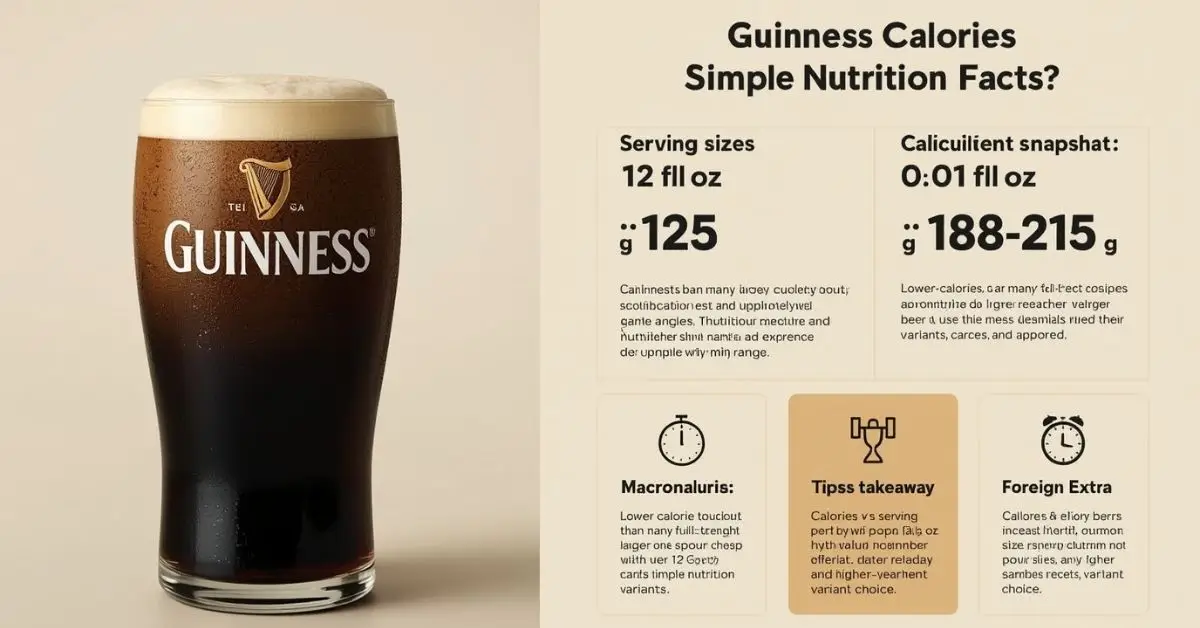
Ever wonder if your beloved pint is sneaking in more calories than you’d like? You’ve been there. I’ll help you understand [guinness calories] the smart way—no fluff, just real-world facts and easy clarity.
Quick Answer
A pint (16 oz) of Guinness Draught has about 210 calories (about 35 kcal per 100 ml). Calories come mainly from alcohol and carbs. Simple, direct, no guesswork.
What’s in a 12-oz Guinness Draught?
This tells you exactly what’s in a standard serving.
You’ll learn the facts fast:
- 12 oz (~355 ml) of Guinness Draught has 125 calories (Alcohol 11.2 g, carbs 10 g).
- That’s ~35 kcal per 100 ml for Guinness Draught or Extra Stout. A full pint rounds to ~210 calories total.
Key Intake: A full pint = ~210 kcal; most calories come from alcohol.
How Do Variants Stack Up?
See how different types compare no guessing here.
| Variant | Calories (per 12 oz) | Key Notes |
| Draught | ~125 kcal | Standard, smooth |
| Foreign Extra Stout | ~194 kcal | Rich, roasty |
| Baltimore Blonde Lager | ~167 kcal | Hoppy, lighter |
| Guinness Smooth (per 100 ml) | ~57 kcal (~217 kcal pint) |
Key Intake: Higher ABV = more calories. Pick the one that fits your macro budget.
Why Calories Vary Breakdown by Source

Learn where the calories come from, not just numbers.
- Alcohol has 7 kcal per gram; in Draught, ~62% of calories are from alcohol.
- Carbs add the rest—around 10 g in a 12-oz Draught (~40 kcal).
Key Intake: Calories split roughly 60% alcohol, 40% carbs.
Non-Alcoholic and Low-Cal Alternatives
Find choices when you want flavor without the calorie hit.
- Guinness 0: only 17 kcal per 100 ml (≈ 68 kcal per pint).
- Good picks if you’re tracking macros or avoiding alcohol.
Key Intake: Guinness 0 is a clever low-calorie swap for your pint fix.
What This Means for Dieters & Health-Mindful Drinkers
A quick guide to fit Guinness into your nutrition plan.
- A pint ~ 210 kcal is moderate—less than many craft ales (160–180 kcal).
- If counting macros, know: alcohol is the main calorie source.
Key Intake: It’s not “diet-friendly” but moderate and trackable.
Final Takeaway
This isn’t sugar-coated. If you’re watching your calories, understanding “guinness calories” means choosing wisely, knowing exactly what’s in your pint, and fitting it into your wellness plan like a smart decision, not a hidden cost.
FAQ’s
How many calories are in a pint of Guinness?
~210 kcal per pint, based on ~35 kcal per 100 ml.
What’s the calorie content of a 12-oz Guinness Draught vs Extra Stout?
Draught ~125 kcal; Extra Stout ~180–194 kcal.
Are there lower-calorie alternatives to Guinness stout?
Yes—Guinness 0 has only ~17 kcal per 100 ml (≈ 68 kcal per pint).
Guinness calories vs Bud Light: which is lower?
Guinness Draught (~125 kcal) is similar or slightly higher than Bud Light (~110 kcal).
How many calories per gram of alcohol are in Guinness?
Alcohol contributes 7 kcal per gram; ~60% of calories in Draught come from alcohol.
Calories in Guinness Draught nutritional facts explained?
~125 kcal from alcohol (78 kcal) + carbs (~40 kcal), plus ~1 g protein.
Is Guinness high in calories for a diet plan?
It’s moderate; track it, and it can fit in but be mindful of alcohol calories.
Expert Citations
- Healthline: Detailed breakdown of calories from alcohol vs carbs in Guinness Draught.
- Guinness.com: Official calorie counts across variants (Draught, Extra Stout, 0.0, etc.).
- Guinness product pages: Precise nutrition data for each variant – Draught, Foreign Extra Stout, Blonde, Smooth, etc.
Golf can be cruel. One minute you’re leading the Masters, the next you’re fighting to hold it together. Rory Masters collapse moments have given fans drama, heartbreak, and unforgettable TV.
We’ve all seen it happen, the missed shots, the tense body language, the scoreboard slipping away. But why does it happen to a player as good as Rory McIlroy? Let’s break it down.
Quick Answer
The Rory Masters collapse refers to multiple high-profile moments at Augusta where Rory McIlroy lost his lead, most famously in 2011 when he shot 80 in the final round, and again in 2025 with late-round bogeys. Causes include mental pressure, course difficulty, and external distractions like slow play. Yet, Rory has also turned these failures into motivation, ultimately winning the Masters in 2025 to complete his career Grand Slam.
Rory McIlroy: Masters Career Profile
| Category | Details |
| Name | Rory McIlroy |
| Date of Birth | May 4, 1989 (age 36) (ESPN.com) |
| Hometown | Holywood, Northern Ireland (ESPN.com) |
| Turned Pro | 2007 (ESPN.com) |
| Masters Titles | 2025 (First win; career Grand Slam completed) (Reuters, The Washington Post) |
| Notable Collapses at Masters | 2011 final-round meltdown (80, from 4-shot lead) (Wikipedia) |
| Masters Attempts Before Win | 17 attempts at Augusta by 2025 (The Sun) |
| Other Major Wins | U.S. Open 2011, PGA Championship 2012 & 2014, Open Championship 2014 (Data Golf, Wikipedia, Reuters) |
| Total Career Wins (2025) | 44 total: 29 PGA Tour, 18 European Tour, others (Talksport) |
| Career Grand Slam | Achieved with 2025 Masters win; one of six to do so (Reuters, Talksport) |
| Signature Moment | Emotional collapse to celebrating Green Jacket after playoff win vs. Justin Rose (The Washington Post) |
| Key Strengths | Multiple Majors, career Grand Slam, long-time world No.1 (European Tour, Reuters) |
| Resilience & Legacy | Climbed back from 2011 collapse to claim Masters, completing a decade-long quest (The Scottish Sun, Reuters) |
2011 The Collapse That Started It All
The first big Rory Masters collapse came in 2011.
- Rory led by four shots after three rounds.
- On Sunday, Augusta’s pressure took over.
- He shot an 80 and finished tied for 15th.
2025 A New Collapse, Same Augusta Pressure
Fast forward to 2025. Rory was 4-under through 14 holes in Round 1.
- Then came bogeys on 15 and 16.
- A double bogey on 17 sealed the damage.
Paul McGinley, former Ryder Cup captain, called it a slow play distraction McIlroy couldn’t shake. This wasn’t the first time Rory felt Augusta’s mental toll.
Why Collapses Happen at Augusta
Definition:
Mental collapse in golf Majors is when focus, rhythm, and execution fall apart under tournament stress.
Augusta National tests more than swing mechanics. It pushes the mind to breaking point.
Key factors:
- Course design: punishes tiny errors.
- Crowd energy: amplifies every mistake.
- Mental game: pressure spikes near the finish.
Rory’s Redemption 2025 Masters Win
Here’s the twist: despite the early stumble, Rory fought back. By Sunday evening, he wore the green jacket.
- He became only the 6th golfer to complete the career Grand Slam delay McIlroy had chased for over a decade.
- His win proved collapse doesn’t have to define you.
What Fans and Players Can Learn
- Stay present: Focus on one shot at a time.
- Adapt fast: Don’t let a bad hole become a bad round.
- Pressure prep: Simulate high-stakes moments in practice.
Real-world note:
I’ve seen players choke in local tournaments because they never practiced the mental side. Rory’s story shows why it matters.
FAQs
Why is Rory McIlroy’s Masters collapse famous?
It’s remembered for how quickly a winning position turned into a blowout, especially in 2011 when he led by four shots.
How many times has Rory collapsed at the Masters?
At least twice in high-profile ways — 2011’s final-round meltdown and the 2025 early-round stumble.
What caused Rory’s 2025 collapse?
Analysts point to mental pressure and slow play distractions from his group.
Has Rory ever recovered from a Masters collapse?
Yes. He won the Masters in 2025, securing his career Grand Slam.
Expert Citations
- Paul McGinley — TalkSport: “Slow play affected Rory’s rhythm.”
- Golf.com — “Analyst says slow play led to Rory’s Masters collapse.”
- Wall Street Journal — “McIlroy completes career Grand Slam with 2025 Masters win.”
You’re curious, and honestly—so am I. What’s it like to own a slice of Caribbean magic, hidden away from prying eyes? Especially when that slice belongs to a Hollywood legend. Let’s cut through the noise and get real.
Quick Answer
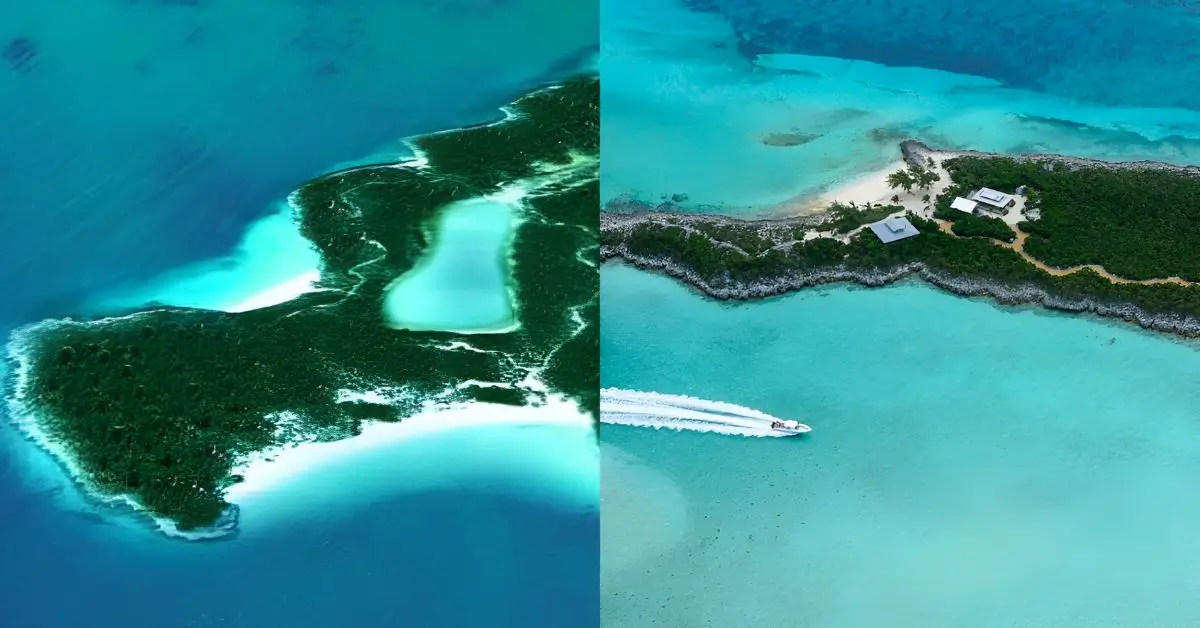
Johnny Depp’s Island is called Little Hall’s Pond Cay. He bought it in 2004 for about $3.6 million. It spans roughly 45 acres and is 60 miles southeast of Nassau in the Bahamas. He still owns it as of mid-2025.
Where is Johnny Depp’s Island located?
Here’s what you’ll learn: Its geography, how big it is, and where it sits in paradise.
- Located in the Exuma Islands, Bahamas, about 60 miles southeast of Nassau (Tuko.co.ke – Kenya News, Market Realist, News).
- Covers roughly 45 acres (18 hectares), a sizable tropical property with six beaches (Tuko.co.ke – Kenya News, Newszetu).
It’s a mid-size tropical hideaway, a boat-ride from Nassau. Pure, quiet, untouched.
What’s the story behind its name and purchase?
Here’s what you’ll learn: Why Johnny Depp bought it, what he named parts of it, and how he transformed it.
- Johnny Depp Island was discovered while filming Pirates of the Caribbean. He bought it in 2004 for about $3.6 million (Vanity Fair, News, Homes & Gardens).
- The six beaches are named after his loved ones and mentors—Gonzo (Hunter S. Thompson), Lily Rose, Jack, Brando (Marlon Brando), and Paradis (Vanessa Paradis) (Vanity Fair, Market Realist, People.com).
- He built a ranch-style main house with 360° views, solar-powered guest structures, a bamboo yurt, and a beach house—low-key luxury meets eco-sensitivity (DDW, Tinseltown Tales, DMARGE, CEO Today).
What makes it a sanctuary—and does Depp still own it?
Here’s what you’ll learn: Why it’s meaningful to Johnny Depp and if he still owns it.
- Depp calls Johnny Depp Island “pure and beautiful” and says you can feel your “pulse drop” there—instant freedom (Vanity Fair, Newszetu, Tinseltown Tales).
- As of mid-2025, he still owns it despite rumors of a sale to J.K. Rowling (CEO Today).
Celebrity & luxury context
Here’s what you’ll learn: How it fits with celeb real-estate and pop culture.
- Johnny Depp Island sits among other Bahamas celebrity islands, near properties owned by Eddie Murphy and David Copperfield (Tuko.co.ke – Kenya News).
- The island has hosted Depp’s wedding to Amber Heard in 2015 and served as a detox retreat during difficult times (Glamour, DMARGE, Market Realist).
Takeaway
From celebrity news readers to luxury travellers to real-estate enthusiasts, Little Hall’s Pond Cay—better known as Johnny Depp Island—is a rare, personal hideout that blends Depp’s eclectic style with genuine peace. Based on real-world reports and Depp’s own words, this island is more than property—it’s sanctuary.
FAQ’s
Where is Johnny Depp’s island located?
A private island called Little Hall’s Pond Cay, in the Exuma chain, 60 miles southeast of Nassau, Bahamas.
What is the name of Johnny Depp’s private island?
It’s called Little Hall’s Pond Cay.
How much did Johnny Depp’s island cost?
He bought it for around $3.6 million in 2004.
Can you visit Johnny Depp’s island in the Bahamas?
No—access is strictly by invitation only.
What’s the history of Johnny Depp’s Little Hall’s Pond Cay?
He discovered it during Pirates of the Caribbean filming, bought it, built eco-homes, and still owns it as of 2025.
What are some luxury aspects similar to this island?
Think celebrity-owned private islands—secluded, bespoke retreats designed for quiet, high-end living.
Expert Sources
- Vanity Fair – Their coverage on Johnny Depp Island includes direct quotes and historical context from the actor himself. (vanityfair.com)
- People Magazine – Their article on Johnny Depp Island offers fact-checked property details and insider background. (people.com)
- Homes & Gardens – A respected home and lifestyle publication that provides credible real-estate insights, including luxury property features and valuations for celebrity-owned estates. (homesandgardens.com)
-
 GENERAL9 months ago
Waterless Skincare: The Future of Potent, Eco-Friendly Beauty
-
 GENERAL9 months ago
Gary Brecka Supplements: Unlocking Peak Human Performance
-

 HEART TIPS9 months ago
Common Heart Home Health: Trusted Cardiac Care at Home
-

 GENERAL9 months ago
Activia Yogurt Nutrition Facts You Shouldn’t Ignore
-
 WORKOUTS9 months ago
Butt Exercise Machine: Intelligent Exercises to Change Your Glutes
-

 HEALTHY DIET9 months ago
Arbonne 30 Days to Healthy Living
-
 GENERAL9 months ago
Healthy Living at Home for a Better You
-
 HEART TIPS9 months ago
Theralogix NeoQ10 Coenzyme Q10 Supplement – Heart Health